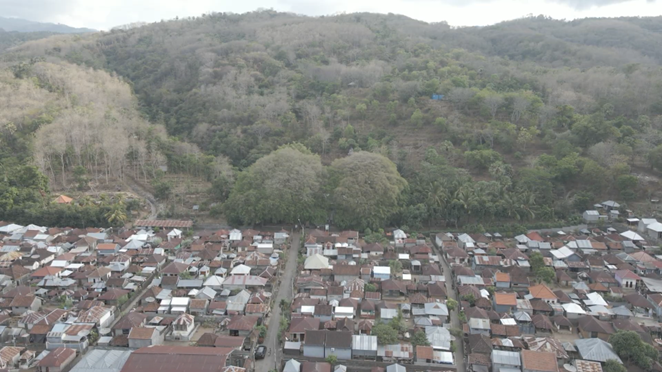
History of Julah Village

History of Julah Village
In ancient times, there were 20 bronze inscriptions in the Balai Agung Temple in Julah Village, but now only 11 remain, with the remaining nine preserved in the Balai Agung Temple. The 20 inscriptions can be divided into six groups: 1) the era of Queen Ugrasena; 2) the era of King Tabanendra Warmadewa; 3) the era of King Janasdhu Warmadewa; 4) the era of Queen Sang Ajnadewi; 5) the era of King Anak Wungcu; and 6) the era of King Jaya Pangus. All of these inscriptions were previously published by a foreign scholar, Mr. Dr. Brandes, in the magazine Tijdschrift Koninklijk Batafiaasch Genootschap, published in 1889. Some of them were later republished by Dr. Goris, in his book “Inscriptions of Bali,” published in 1954, summarizes these groups as follows: In the year Caka 844 (January 24, 923 AD), Queen Sri Ugrasena, along with her high-ranking officials, held a meeting with the village chiefs of Julah in the hall of the Singhamandewa Palace. During the meeting, it was explained that the residents of Julah Village were very restless, anxious, and fearful due to gangs of robbers who frequently captured and kidnapped them. This chaos caused most of the villagers to flee to safer places. This event was formulated in the negotiations held by Queen Ugrasena, who made several decisions, including: All residents of Julah Village who remained in the exiled areas were to immediately return to Julah Village and live in their original homes. Queen Ugrasena also established ceremonial regulations for those who died from robbery or wrongful death, in addition to the regulations for regular funeral ceremonies. With this, the income taxes of Julah villagers, usually collected by the King, were abolished, but dues for temple ceremonies remained. Furthermore, it was decided that Julah villagers were prohibited from capturing or kidnapping people belonging to others. If a boat or canoe was stranded at sea, its contents would become the property of the temple for its use. Village boundaries were also established in King Ugrasena’s laws.
These are some of the contents of this first-class inscription. During the reign of Queen Ugrasena, Bali was ruled by King Tulodong, with Mpu Sendok as his deputy. Queen Ugrasena’s efforts to pacify the Julah villagers were in vain. Her reign was replaced by Sri Aji Tabanendra Warmadewa. This king ruled in Bali in 955 AD, while Sri Makutawangca-Wardana ruled in Java. His wisdom enabled most of the Julah villagers, who had previously fled elsewhere, to return to their home villages. The king then decreed that the villages included in the Julah Village area were: Kutur, Tukad Mamurpur, Poh Talur, Tring Wor, Ratu Kamodi, Lijong, Baringin, Air Puhun, Air Belatuk, Air Ranusan, Air Tampikan, Air Hepu, Air Poh Tanduk, Balimbing, Renek, Bakar, and Candi. This charter was drawn up in the Caka year 873 (December 19, 1951). The reign of Sri Aji Tabanendra-Warmadewa was then replaced by that of King Sri Janasadhu-Warmadewa. In 897 (April 6, 975 CE), this king, along with his high-ranking officials, convened the leaders of Julah Village, who had recently returned from their former exiles. During the meeting, the king decided the following: If any buildings were damaged, such as temples, graves, fountains, baths, temples, and roads, they would have to be repaired, and the costs would be borne by the villages: Julah Village, Indra Pura Village (now known as Depeha Village), Buhun Dalem Village (now known as Julah Village), and Hiliran Village (now known as Tejakula Village). It was also decided that if robbers attacked the Dharmakuta hermitage, all residents of Julah Village would come out armed to help the hermitage’s residents. The fees for temple ceremonies were also determined in accordance with the decrees of previous kings. This law, enacted by King Janasadhu-Warmadewa, was drafted on April 6, 975 CE, and engraved on bronze by his scribe, Banacri. From the reign of Sri Janasadhu until the reign of Dharma Udayana Warmadewa (1011 CE), Julah Village and its surrounding area enjoyed peace and security. Apparently, during this time, robbers no longer visited Julah Village, as its population grew stronger and more united. During the Janasadhu era, Bali was ruled by King Dharmawangsa.